
Blog
How to Keep an Estate Tree-Care Record That Is Actually Useful
A simple tree map, dated observations and a clear work history help everyone managing the property.
Quick answer: Keep one practical record for the property: a simple tree map, dated photographs from the ground, a history of work and a list of unresolved questions. Make it easy for an owner, property manager and gardener to use the same information. The record should help the next conversation, rather than become a complicated project of its own.
Estate landscapes often outlast the people responsible for day-to-day maintenance. A new manager may inherit a mature tree without knowing what happened five years ago, while the person who remembers an irrigation change may no longer work at the property. A short, consistent record helps preserve that context and makes it easier to explain a concern clearly.
How Do You Identify the Trees Consistently?
Start with a basic property sketch and a label for each significant tree or group. You do not need a design-quality drawing. Use landmarks that remain recognizable, such as a building corner or driveway entrance. If identification is uncertain, write “species to confirm” instead of attaching a confident but unverified name.
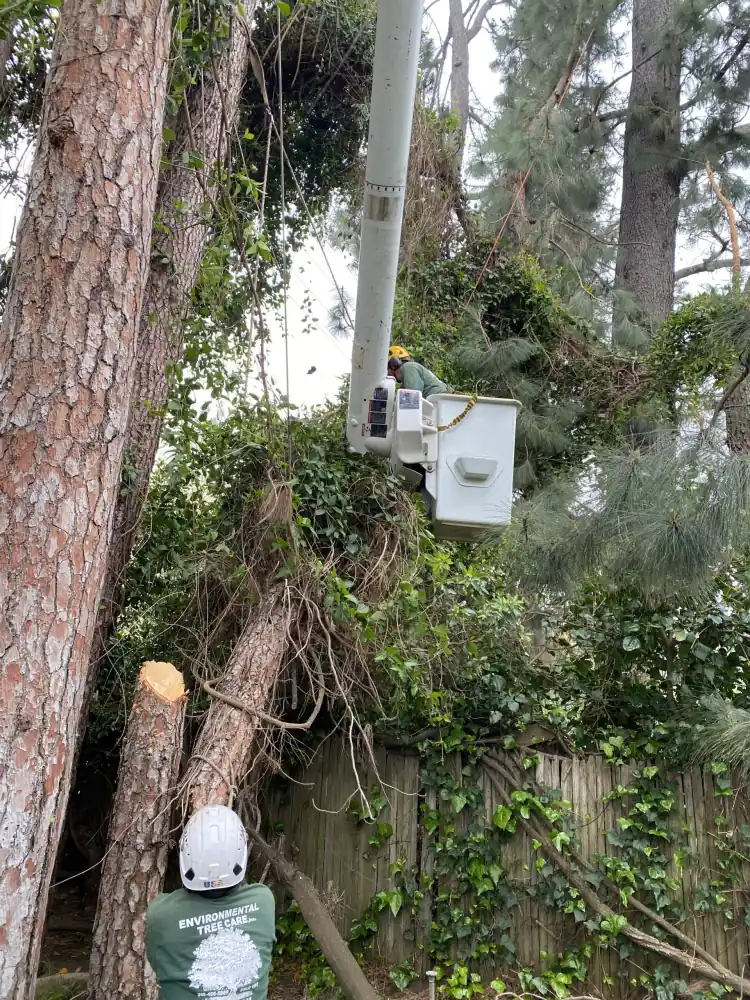
Take a ground-level overview photograph for each label and save it with the same file name pattern. Avoid creating a record that requires climbing, standing beneath damaged limbs or entering a hazardous area. The purpose is to show which tree you mean and where it sits. Environmental Tree Care’s estate tree trimming can be discussed against that shared map.
What Belongs in the Work History?
Save the date, provider and agreed scope whenever work is completed. Keep the original quote and any written notes about exclusions or follow-up. If a tree was pruned for a particular reason, record that reason. “Clearance beside garage” tells a future manager more than “trimmed trees.”
Distinguish a completed service from a recommendation that has not been acted on. If tree bracing or feeding was discussed, record whether it was an option, an agreed task or work actually performed. This prevents a later conversation from treating an old suggestion as a current installation or treatment.
| Record Section | What to Save | Why It Helps |
|---|---|---|
| Tree map | Labels, locations and overview photographs | Everyone discusses the same tree |
| Work history | Date, scope and provider documents | Past decisions remain understandable |
| Site changes | Irrigation, construction or access changes | Context is available for evaluation |
| Open questions | Concern, date raised and next contact | Follow-up is not lost |
How Should You Record a Change in Appearance?
Describe what you can see without turning the observation into a diagnosis. Write where the change appears and when it was first noticed. For example, a record could say that one side has fewer leaves in a photograph taken this month than in the previous spring. It should not declare a disease or prescribe a treatment on that basis alone.
Keep the original photographs so that they can be compared consistently. A dramatically different camera angle or season can make a comparison misleading. When possible, return to the same safe viewpoint. Use the record to ask whether an assessment is needed, not to replace the person evaluating the tree on site.
Why Include Irrigation and Landscape Changes?
University of California guidance explains that watering needs depend on the plant and its environment. For record keeping, that means an irrigation adjustment is useful context even if the tree was not the reason for the change. Note a replacement irrigation system, changes in scheduling or a redesigned planted area beside the tree.
Construction and landscape projects deserve the same treatment. Record what changed, where and when. Do not assume that a tree will be unaffected because no branch was cut. A future discussion about the tree is easier when the provider can understand the history of the space around it. Our tree-care planning article offers questions for the next visit.
Who Should Own the Record?
Choose one person to maintain the current version. Other people can contribute photographs and observations, but a clear owner prevents several conflicting copies from circulating. Store the record where the property’s regular decision makers can find it, alongside important maintenance documents rather than in a single person’s message history.
At a handover, review the open questions and upcoming agreed work. Explain which information is confirmed and which identification or approval issue remains unresolved. If a tree has been discussed for removal, make sure the next manager knows whether any decision was actually made. That distinction matters when an old estimate is found months later.
How Much Detail Is Enough?
A useful record is concise enough to maintain. Begin with the trees that matter most to the property’s use and character. Add detail when it answers a real question, such as what work was done or whom to contact about an outstanding concern. A long spreadsheet with many empty fields is less useful than a short record that stays current.
Environmental Tree Care specializes in estate tree trimming and brings over 30 years of Malibu experience. To discuss maintenance for a Malibu property, gather the records you have and contact the team for a free quote. You do not need a perfect archive before asking for help; a clear map and a few dated observations make a good starting point.
Review the record when responsibility changes, even if no work is immediately planned. Ask the outgoing manager to explain abbreviations, unlabeled photographs and unfinished discussions. Keep uncertain recollections separate from dated documents. That approach gives the next person useful context without turning memory into an asserted fact about what was installed, approved or completed.
Sources
FAQ
Common Questions
Still have questions? Call us any day and ask.
Do I need to identify every species before calling?
No. Record uncertain identification as a question and explain which tree you mean with safe ground-level photographs.
Should an observation be recorded as a diagnosis?
No. Record what changed and when, and discuss the need for an assessment with an appropriate professional.
What is the simplest useful starting point?
A property sketch, dated photographs, previous work documents and a short list of open questions.
More articles
-
Before You Trim or Remove a Native Tree in Malibu
Identify the tree and gather property records before planning work that may require City approval.
Read more -
Dry-Weather Tree Care: Questions to Ask Before Changing the Routine
Gather irrigation history and site observations before adding water, feeding or pruning.
Read more -
How to Plan Tree Pruning on a Malibu Property
Start with the purpose of the work, the condition of the tree and any native-tree requirements before deciding what to cut.
Read more
Get In Touch
Ready to Get Started?
If this sounds like your situation, we can help.